
Hey there! As a supplier of Return V - type Idlers, I've been getting a lot of questions about the dynamic balance of these little but super important components. So, I thought I'd take some time to break it down for you.
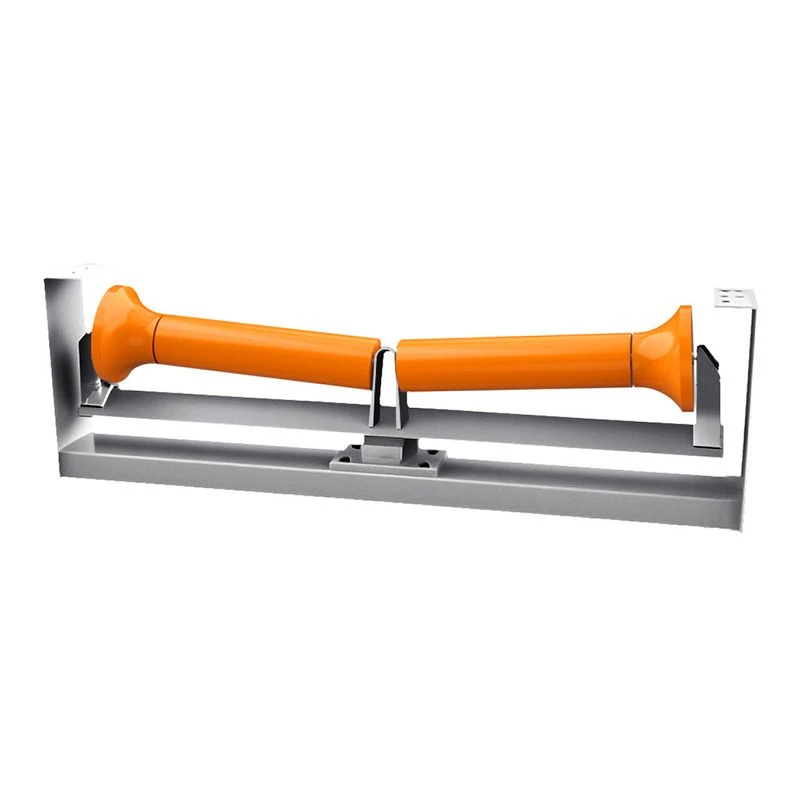
First off, let's talk about what a Return V - type Idler is. It's a key part of a belt conveyor system. The V - shape design helps to guide the belt back in the return run, making sure it stays centered and reduces the chances of it wandering off track. You can check out some other types of return idlers like the Return Friction V - type Self - Aligning Idler, Return Guide Self - aligning Idler, and Return Flat Idler on our website.
Now, onto the dynamic balance. Dynamic balance is all about how the idler behaves when it's in motion. A well - balanced Return V - type Idler is crucial for the smooth operation of the belt conveyor. When an idler is dynamically balanced, it rotates evenly around its axis without causing any excessive vibrations or wobbling.
Why is this so important? Well, let's think about it. If an idler isn't balanced properly, it can create a whole bunch of problems. For starters, it can cause uneven wear on the belt. The constant vibrations can make the belt rub against the sides of the idler or other parts of the conveyor system, leading to premature wear and tear. This means you'll have to replace the belt more often, which can be a real pain in the pocket.
Moreover, unbalanced idlers can also put extra stress on the conveyor's bearings and other components. Over time, this can lead to mechanical failures and breakdowns. And let's face it, no one wants to deal with a conveyor system that keeps breaking down. It can disrupt your production process, cause delays, and ultimately cost you a lot of money.
So, how do we achieve dynamic balance in a Return V - type Idler? There are a few steps involved in the manufacturing process. First, we start with high - quality materials. The quality of the steel or other materials used to make the idler plays a big role in its balance. We use top - notch materials that have consistent density and strength.
Next, we use precision machining techniques. The idler's outer surface needs to be perfectly round, and the V - shape needs to be symmetrical. Any small deviations in the shape or dimensions can affect the balance. That's why we use advanced machining tools and equipment to ensure that every idler meets our strict quality standards.
After the machining process, we perform a dynamic balance test. This involves spinning the idler at high speeds and using sensors to measure any vibrations. If the vibrations are within an acceptable range, the idler is considered balanced. But if there are any issues, we make adjustments by adding or removing small amounts of material from specific areas of the idler.
Another important factor in maintaining dynamic balance is proper installation. Even if an idler is perfectly balanced when it leaves the factory, incorrect installation can throw off its balance. When installing the Return V - type Idler, it's essential to make sure it's aligned correctly with the belt and other components of the conveyor system. The mounting brackets need to be secure, and the idler should be able to rotate freely without any obstructions.
Regular maintenance is also key to keeping the dynamic balance intact. Over time, the idler can accumulate dirt, dust, and debris, which can affect its balance. It's important to clean the idlers regularly and check for any signs of wear or damage. If you notice any issues, such as excessive vibrations or unusual noises, it's a good idea to inspect the idler and make any necessary repairs or replacements.

In addition to the manufacturing, installation, and maintenance aspects, the operating conditions of the conveyor system can also impact the dynamic balance of the Return V - type Idler. For example, if the conveyor is operating in a harsh environment with a lot of dust, moisture, or extreme temperatures, it can put more stress on the idlers. In such cases, it might be necessary to use special coatings or seals to protect the idlers and maintain their balance.
The speed and load of the conveyor system also matter. If the conveyor is running at high speeds or carrying heavy loads, the idlers need to be able to handle the additional stress. We offer different models of Return V - type Idlers with varying load - carrying capacities and speed ratings to meet the specific needs of your conveyor system.
When it comes to choosing the right Return V - type Idler for your application, it's important to consider all these factors. You need to think about the type of material being conveyed, the operating environment, the speed and load of the conveyor, and of course, the importance of dynamic balance.
If you're in the market for a reliable Return V - type Idler, we've got you covered. Our idlers are designed and manufactured with the highest level of precision and quality to ensure optimal dynamic balance. We've been in the business for a long time, and we've built a reputation for providing top - notch products and excellent customer service.
So, if you're interested in learning more about our Return V - type Idlers or have any questions about dynamic balance, don't hesitate to reach out. We're here to help you find the perfect solution for your belt conveyor system. Whether you're a small - scale operation or a large industrial facility, we can work with you to meet your specific requirements.
In conclusion, the dynamic balance of a Return V - type Idler is a critical factor in the efficient and reliable operation of a belt conveyor system. By understanding what it is, how to achieve it, and how to maintain it, you can ensure that your conveyor system runs smoothly and without any major issues. So, if you're looking for a high - quality Return V - type Idler that offers excellent dynamic balance, give us a shout. We're ready to start a conversation and help you take your conveyor system to the next level.
References
- Belt Conveyor Design Handbook, Various Industry Publications
- Technical Documents on Idler Manufacturing and Quality Control, Industry Standards Organizations


