
Hey there! As a supplier of belt conveyor pulleys, I've seen firsthand how crucial the right mounting method is for these pulleys. Different mounting methods can significantly impact the performance, durability, and efficiency of belt conveyors. So, let's dive into the various mounting methods for belt conveyor pulleys.
1. Shaft Mounting
Shaft mounting is one of the most common methods used for belt conveyor pulleys. In this method, the pulley is mounted directly onto a shaft. The shaft provides the support and rotational force necessary for the pulley to function.
There are a few different ways to mount a pulley on a shaft. One common approach is using a keyway. A keyway is a slot cut into both the shaft and the pulley hub. A key, which is a small piece of metal, is inserted into the keyway to prevent the pulley from rotating independently of the shaft. This ensures a secure connection between the pulley and the shaft.
Another option for shaft mounting is using a taper lock bushing. A taper lock bushing is a mechanical device that fits between the shaft and the pulley hub. It has a tapered inner surface that matches the taper of the shaft. When the bushing is tightened, it creates a tight fit between the pulley and the shaft, allowing for easy installation and removal.
Shaft mounting is great because it provides a stable and reliable connection. It's suitable for a wide range of applications, from light-duty to heavy-duty conveyors. For example, in a small - scale packaging facility, a Belt Conveyor Smooth Pulley mounted on a shaft can efficiently move products along the conveyor line.
2. Flange Mounting
Flange mounting involves attaching the pulley to a flange, which is a flat, circular plate with holes around its perimeter. The flange is then bolted or welded to a support structure, such as a frame or a wall.
This mounting method is often used when the pulley needs to be easily accessible for maintenance or replacement. For instance, in a food processing plant, where hygiene is crucial, flange - mounted pulleys can be quickly removed and cleaned.
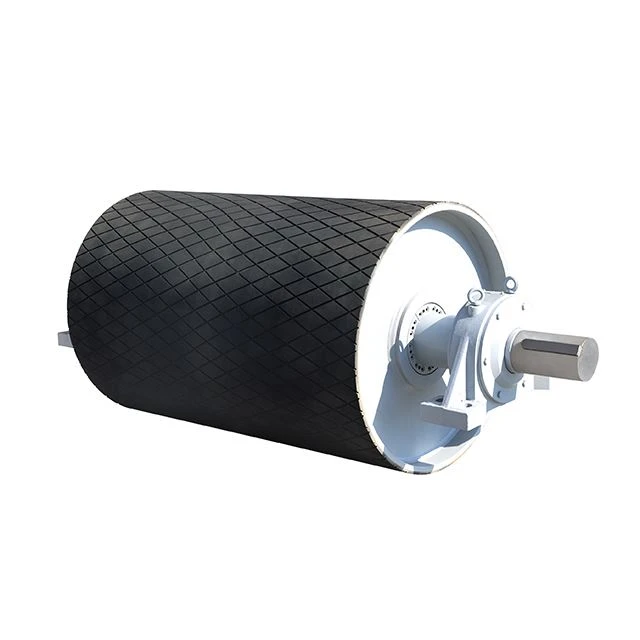
Flange - mounted pulleys are also useful in situations where the conveyor layout requires the pulley to be mounted at an angle or in a non - standard position. The flange provides a stable base for the pulley, allowing it to be installed securely in various orientations. You might find Heavy Duty Conveyor Tail Return Drum Pulleys flange - mounted in a large - scale mining operation, where they need to withstand high loads and harsh conditions.
3. Pillow Block Bearing Mounting
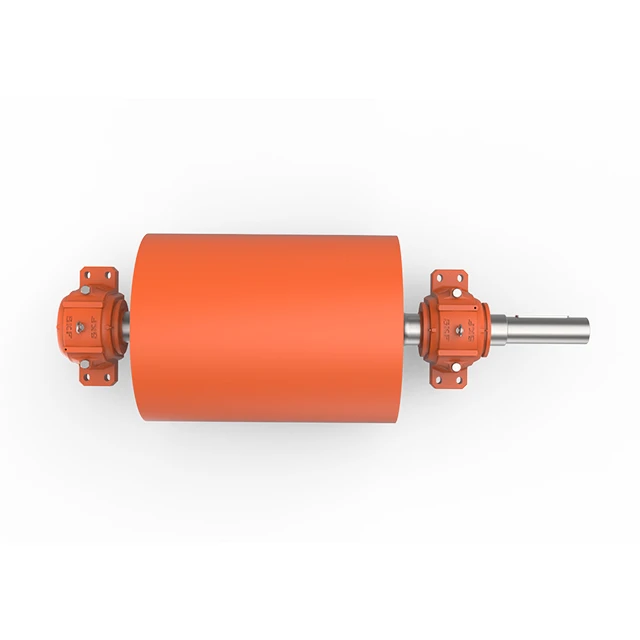
Pillow block bearings are self - contained units that house a bearing and are designed to support a rotating shaft. In pillow block bearing mounting, the pulley is mounted on a shaft that is supported by one or more pillow block bearings.
These bearings are typically mounted on a flat surface, such as a conveyor frame. The advantage of using pillow block bearings is that they provide smooth rotation and can handle misalignment between the shaft and the support structure.
This mounting method is ideal for long - distance conveyors or those that operate at high speeds. The pillow block bearings reduce friction and wear on the shaft, extending the lifespan of the pulley and the conveyor system. For example, in a large - scale distribution center, a conveyor with Head Pulley Transmission Pulley mounted using pillow block bearings can efficiently move large volumes of goods over long distances.
4. Take - Up Mounting
Take - up mounting is used to adjust the tension in the conveyor belt. The pulley in a take - up system is mounted on a movable frame that can be adjusted to increase or decrease the distance between the pulleys.
This is important because proper belt tension is essential for the efficient operation of the conveyor. If the belt is too loose, it can slip on the pulleys, causing reduced efficiency and potential damage to the belt. If the belt is too tight, it can put excessive stress on the pulleys and other components of the conveyor system.
Take - up mounting can be either manual or automatic. Manual take - up systems require an operator to adjust the position of the pulley periodically. Automatic take - up systems, on the other hand, use a mechanism such as a spring or a hydraulic cylinder to maintain the proper belt tension automatically. This is commonly used in continuous - operation conveyor systems, like those in a power plant or a cement factory.
5. Cantilever Mounting
Cantilever mounting involves mounting the pulley at the end of a shaft that is supported at only one end. This type of mounting is useful when space is limited or when the conveyor layout requires the pulley to be located at the edge of a structure.
However, cantilever mounting has its limitations. The unsupported end of the shaft can be subject to bending and vibration, especially under heavy loads. Therefore, it's important to carefully design the shaft and the support structure to ensure the stability of the pulley. Cantilever - mounted pulleys are often used in small - scale conveyors, such as those in a laboratory or a small workshop.
Considerations When Choosing a Mounting Method
When deciding on the best mounting method for your belt conveyor pulleys, there are several factors to consider.
- Load Capacity: The amount of weight the pulley will need to support is a crucial factor. Heavy - duty applications, like mining or construction, will require a more robust mounting method, such as shaft mounting or pillow block bearing mounting.
- Conveyor Speed: High - speed conveyors need a mounting method that can provide smooth rotation and minimize vibration. Pillow block bearing mounting is often a good choice in these cases.
- Space Constraints: If space is limited, you might need to consider mounting methods like cantilever mounting or flange mounting, which can be more compact.
- Maintenance Requirements: Some mounting methods, like flange mounting, make it easier to access and maintain the pulley. If your conveyor system requires frequent maintenance, this is an important consideration.
Conclusion
In conclusion, there are several different mounting methods for belt conveyor pulleys, each with its own advantages and applications. As a belt conveyor pulley supplier, I understand the importance of choosing the right mounting method to ensure the optimal performance of your conveyor system.
Whether you're looking for a Heavy Duty Conveyor Tail Return Drum Pulleys, a Head Pulley Transmission Pulley, or a Belt Conveyor Smooth Pulley, we can help you select the appropriate mounting method for your specific needs.
If you're in the market for belt conveyor pulleys or need advice on the best mounting method for your application, don't hesitate to reach out. We're here to assist you in making the right choice for your conveyor system.
References
- Conveyor Equipment Manufacturers Association (CEMA) standards
- Industry research papers on belt conveyor technology


