
In the realm of conveyor systems, belt cleaners play a pivotal role in ensuring smooth and efficient operations. As a trusted conveyor belt cleaners supplier, I've witnessed firsthand the significance of understanding the differences between primary and secondary conveyor belt cleaners. This knowledge not only helps in making informed decisions but also in optimizing the performance of conveyor systems.
Primary Conveyor Belt Cleaners: The First Line of Defense
Primary conveyor belt cleaners are installed at the head pulley of the conveyor system. Their primary function is to remove the bulk of the material adhering to the belt immediately after it has discharged the load. This is crucial because if the bulk material is not removed at this stage, it can cause a host of problems downstream.
One of the main advantages of primary cleaners is their ability to handle large volumes of material. They are designed to work under high - speed and high - impact conditions, which are typical at the head pulley. For example, in mining operations where conveyor belts transport large quantities of ore, primary cleaners are essential to prevent the build - up of ore particles on the belt.
There are different types of primary conveyor belt cleaners available in the market. One popular option is the Carbide Belt Cleaner. Carbide belt cleaners are known for their durability and effectiveness in removing stubborn materials. The carbide blades can withstand high wear and tear, making them suitable for harsh industrial environments. They are also adjustable, allowing for precise cleaning according to the specific requirements of the conveyor system.
Another type of primary cleaner is the brush - type cleaner. The Brush Belt Cleaner uses rotating brushes to remove material from the belt surface. Brush cleaners are particularly effective for removing fine particles and sticky substances. They can conform to the shape of the belt, ensuring a thorough cleaning. However, they may require more maintenance compared to carbide cleaners, as the brushes can wear out over time.
Secondary Conveyor Belt Cleaners: The Follow - Up Solution
Secondary conveyor belt cleaners come into play after the primary cleaner has done its job. Their main purpose is to remove any remaining material that the primary cleaner might have missed. This includes fine particles, dust, and small pieces of debris that can still cause problems if left on the belt.
Secondary cleaners are typically installed downstream from the primary cleaner, usually at the tail pulley or other strategic locations along the conveyor. They operate at a lower speed and with less force compared to primary cleaners, as they are dealing with smaller amounts of material.
One of the key benefits of secondary cleaners is that they help to extend the life of the conveyor belt. By removing the remaining contaminants, they reduce the friction between the belt and the pulleys, which in turn reduces wear and tear on the belt. This can result in significant cost savings over time, as conveyor belts are a major investment in any conveyor system.

For instance, in a food processing plant, secondary cleaners are essential to ensure that the conveyor belt is completely clean before it comes into contact with the next batch of food products. This helps to maintain high levels of hygiene and prevents cross - contamination.
There are also various types of secondary cleaners. Some use rubber blades to scrape the remaining material off the belt, while others use a combination of brushes and blades for a more comprehensive cleaning. The choice of secondary cleaner depends on the type of material being transported, the speed of the conveyor, and the specific requirements of the application.
Key Differences between Primary and Secondary Conveyor Belt Cleaners
- Location: As mentioned earlier, primary cleaners are installed at the head pulley, while secondary cleaners are placed downstream, often at the tail pulley or other appropriate positions. The location of each cleaner is determined by its function. The head pulley is where the bulk of the material is discharged, so the primary cleaner needs to be there to remove it immediately. The secondary cleaner then takes care of the remaining material further along the conveyor.
- Cleaning Capacity: Primary cleaners are designed to handle large volumes of material. They are built to withstand high - speed and high - impact conditions and are capable of removing the majority of the material adhering to the belt. Secondary cleaners, on the other hand, deal with smaller amounts of remaining material. Their cleaning capacity is more focused on fine particles and debris.
- Design and Construction: Primary cleaners, such as carbide belt cleaners, are usually more robust and durable. They need to be able to withstand the harsh conditions at the head pulley. Secondary cleaners can be more delicate in their design, as they are operating under less severe conditions. However, they still need to be effective in removing the remaining contaminants.
- Maintenance Requirements: Primary cleaners generally require more maintenance due to the high - stress conditions they operate under. For example, carbide blades may need to be replaced more frequently, and brush cleaners may require regular brush replacement. Secondary cleaners typically have lower maintenance requirements, but they still need to be inspected and maintained regularly to ensure optimal performance.
Importance of Choosing the Right Cleaner
Selecting the appropriate primary and secondary conveyor belt cleaners is crucial for the overall efficiency and longevity of the conveyor system. Using the wrong cleaner can lead to a variety of problems, such as increased wear and tear on the belt, reduced conveyor speed, and even system breakdowns.
For example, if a primary cleaner is not powerful enough to remove the bulk of the material, the secondary cleaner will be overloaded, and it may not be able to perform its function effectively. On the other hand, if a secondary cleaner is not suitable for the type of remaining material, it may not be able to achieve a thorough cleaning, which can lead to contamination and other issues.
When choosing cleaners, it's important to consider factors such as the type of material being transported (e.g., abrasive, sticky, or fine), the speed of the conveyor, the operating environment (e.g., wet, dry, or dusty), and the specific requirements of the application.
The Role of Impact Beds in Conveyor Systems
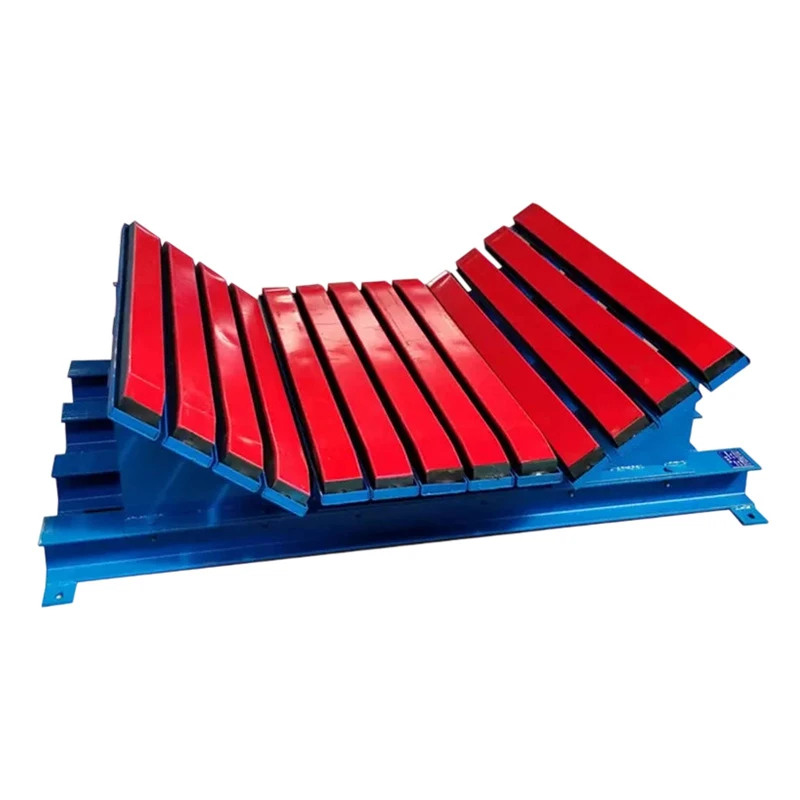
In addition to primary and secondary belt cleaners, Impact Beds also play an important role in conveyor systems. Impact beds are installed at the loading points of the conveyor to absorb the impact of the material being loaded onto the belt. They help to prevent damage to the belt and ensure a smooth transfer of material.
Impact beds work in conjunction with belt cleaners. By providing a stable surface for the belt at the loading point, they reduce the amount of material that can get trapped between the belt and the pulleys. This, in turn, makes the job of the belt cleaners easier, as there is less material to remove.
Conclusion
In conclusion, primary and secondary conveyor belt cleaners are both essential components of a conveyor system. They have distinct functions, locations, and characteristics, and understanding the differences between them is vital for optimizing the performance of the conveyor. As a conveyor belt cleaners supplier, I encourage you to carefully evaluate your conveyor system's needs and choose the right combination of primary and secondary cleaners. Whether you are dealing with heavy - duty mining operations or delicate food processing applications, the right cleaners can make a significant difference in the efficiency and reliability of your conveyor system.
If you are interested in learning more about our conveyor belt cleaners or would like to discuss your specific requirements, I invite you to reach out for a procurement discussion. Our team of experts is ready to assist you in finding the best solutions for your conveyor system.
References
- Conveyor Belt Handbook, Industry Standard Publication
- Industrial Conveyor Systems: Design and Operation, Academic Journal Article
- Best Practices for Conveyor Belt Cleaning, Trade Magazine Feature


