
Hey there! As a supplier of Friction Rollers, I've been getting a lot of questions lately about how the speed of a friction roller affects its friction force. So, I thought I'd take a deep dive into this topic and share some insights with you all.
First off, let's quickly understand what a friction roller is. A friction roller is a key component in many industrial applications, especially in conveyor systems. It uses friction to transfer power or to control the movement of belts or other materials. You can check out more details about Friction Roller on our website.
Now, let's talk about the relationship between the speed of a friction roller and its friction force. At first glance, you might think that as the speed of the roller increases, the friction force would also increase. But it's not that simple.
Factors Affecting Friction Force with Speed
Contact Surface and Material
The material of the roller and the surface it comes in contact with play a huge role. For example, if the roller is made of rubber and it's in contact with a smooth metal belt, the friction characteristics will be different compared to a roller made of a harder plastic material. Rubber has a higher coefficient of friction, which means it can generate more friction force. But as the speed increases, the heat generated due to friction can cause the rubber to soften. This softening can actually reduce the friction force in some cases.
Lubrication
Lubrication is another important factor. In some applications, a small amount of lubricant is used to reduce wear and tear on the roller and the contact surface. However, if the speed is too high, the lubricant might not be able to form a proper film between the surfaces. This can lead to increased friction and even damage to the roller. On the other hand, if there's too much lubricant, it can reduce the friction force significantly at lower speeds.
Load on the Roller
The load on the roller also affects how the friction force changes with speed. A heavier load generally means more normal force between the roller and the contact surface. According to the basic friction formula (F = \mu N) (where (F) is the friction force, (\mu) is the coefficient of friction, and (N) is the normal force), a higher normal force will result in a higher friction force. But as the speed increases, the dynamic behavior of the load and the roller can change. For example, at high speeds, the load might start to vibrate or shift, which can affect the distribution of the normal force and thus the friction force.
The Effect of Low Speed on Friction Force
At low speeds, the friction force is mainly determined by the static friction between the roller and the contact surface. Static friction is the force that resists the start of motion. It's usually higher than the dynamic friction, which is the friction force when the objects are already in motion. When the roller starts to move slowly, the surface irregularities of the roller and the contact surface interlock with each other. This interlocking creates a relatively high friction force.
For example, in a conveyor system that starts from a standstill, the friction roller needs to overcome the static friction to start moving the belt. Once the belt is in motion, the friction force might decrease slightly as it transitions to dynamic friction.
The Effect of High Speed on Friction Force
As the speed of the friction roller increases, several things can happen to the friction force.
Heat Generation
One of the main effects of high speed is heat generation. Friction between the roller and the contact surface converts mechanical energy into heat. At high speeds, the rate of heat generation can be quite high. This heat can cause changes in the material properties of the roller and the contact surface. As mentioned earlier, if the roller is made of a material like rubber, the heat can cause it to soften. A softer rubber roller will have a different coefficient of friction compared to a cool, hard rubber roller. In some cases, the softening can lead to a decrease in the friction force.

Aerodynamic Effects
At very high speeds, aerodynamic effects can also come into play. The air around the roller can create a cushioning effect, which can reduce the effective contact between the roller and the contact surface. This reduction in contact can lead to a decrease in the friction force.
Practical Applications and Considerations
In real - world applications, understanding the relationship between the speed of a friction roller and its friction force is crucial. For example, in a high - speed conveyor system, the design engineers need to ensure that the friction roller can maintain a consistent friction force over a wide range of speeds. If the friction force is too low, the belt might slip, causing the conveyor to malfunction. On the other hand, if the friction force is too high, it can lead to excessive wear and tear on the roller and the belt, increasing maintenance costs.
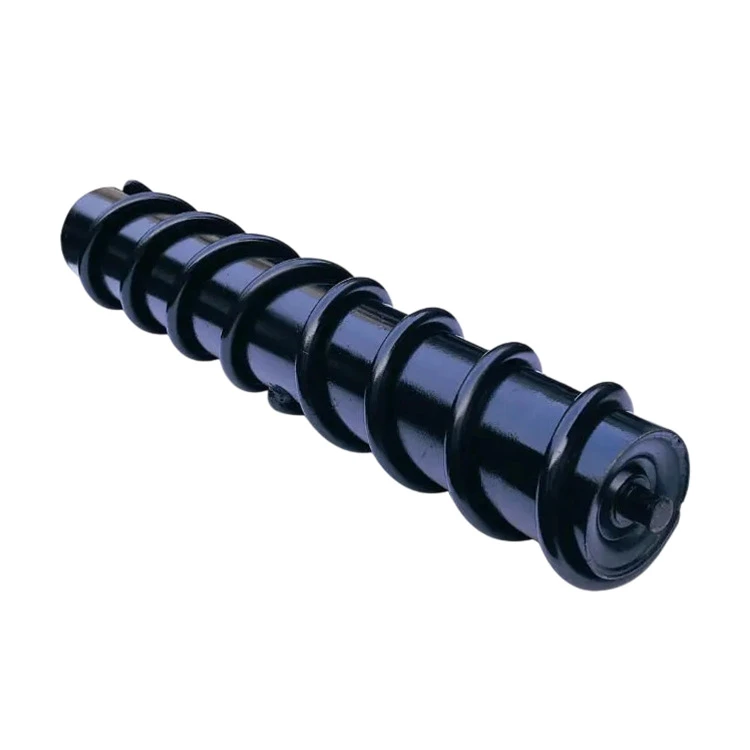
There are also different types of rollers that can be used depending on the application. For example, Sleeve Roller/Comb Roller and Spiral Roller have different friction characteristics. Sleeve rollers are often used when a more even distribution of friction is required, while spiral rollers can be used to provide a self - cleaning effect and to improve the tracking of the belt.
Conclusion
In conclusion, the relationship between the speed of a friction roller and its friction force is complex and depends on many factors such as the contact surface material, lubrication, and the load on the roller. At low speeds, static friction plays a major role, while at high speeds, heat generation and aerodynamic effects can significantly affect the friction force.
If you're in the market for friction rollers or have any questions about how to choose the right roller for your application, don't hesitate to reach out. We're here to help you make the best decision for your industrial needs. Whether you need a friction roller for a high - speed conveyor system or a low - speed application, we've got you covered. So, let's start a conversation and find the perfect solution for you!
References
- "Engineering Tribology" by Stachowiak and Batchelor
- "Mechanical Design of Machine Elements and Machines: A Failure Prevention Perspective" by Robert C. Juvinall and Kurt M. Marshek


