
In the field of industrial machinery, friction rollers play a crucial role in countless applications, from conveyor systems to printing presses. As a dedicated friction roller supplier, I've witnessed firsthand the significance of understanding the relationship between the pressure and friction of a friction roller. This knowledge not only helps in optimizing the performance of these rollers but also in ensuring the smooth operation of the entire machinery they are a part of.
Understanding Friction and Pressure Basics
Before delving into the relationship between pressure and friction in friction rollers, it's essential to have a clear understanding of these two fundamental concepts. Friction is the force that resists the relative motion between two surfaces in contact. It can be either static friction, which prevents an object from starting to move, or kinetic friction, which acts on an object in motion. Pressure, on the other hand, is defined as the force applied perpendicular to the surface of an object per unit area.
In the context of friction rollers, the pressure exerted on the roller's surface directly influences the frictional force generated. When a load is applied to a friction roller, it creates a normal force perpendicular to the contact surface. According to Coulomb's law of friction, the frictional force (F) between two surfaces is proportional to the normal force (N) and can be expressed as F = μN, where μ is the coefficient of friction. The coefficient of friction depends on the nature of the materials in contact and the surface roughness.
Factors Affecting the Relationship
Several factors can affect the relationship between pressure and friction in friction rollers. One of the primary factors is the material of the roller and the surface it comes in contact with. Different materials have different coefficients of friction. For example, rubber rollers typically have a higher coefficient of friction compared to steel rollers, which means they can generate more frictional force for the same amount of pressure. This property makes rubber rollers ideal for applications where high traction is required, such as in conveyor belts.
Surface roughness also plays a significant role. A rougher surface generally has a higher coefficient of friction because it provides more points of contact between the two surfaces. However, if the surface is too rough, it can lead to increased wear and tear on the roller and the mating surface. Therefore, finding the right balance in surface roughness is crucial for optimizing the pressure - friction relationship.
The speed at which the roller rotates can also impact the frictional force. At higher speeds, the frictional force may decrease due to factors such as lubrication effects and the formation of a thin film between the surfaces. This phenomenon is known as the "speed - dependent friction." In some cases, this can be beneficial as it reduces wear, but in others, it may require additional measures to maintain the required frictional force.
Applications and the Pressure - Friction Relationship
In conveyor systems, the relationship between pressure and friction is of utmost importance. Conveyor belts rely on friction rollers to move materials from one point to another. The pressure applied to the rollers determines the amount of frictional force available to drive the belt. If the pressure is too low, the belt may slip, leading to inefficient operation and potential damage to the system. On the other hand, if the pressure is too high, it can cause excessive wear on the rollers and the belt, increasing maintenance costs.
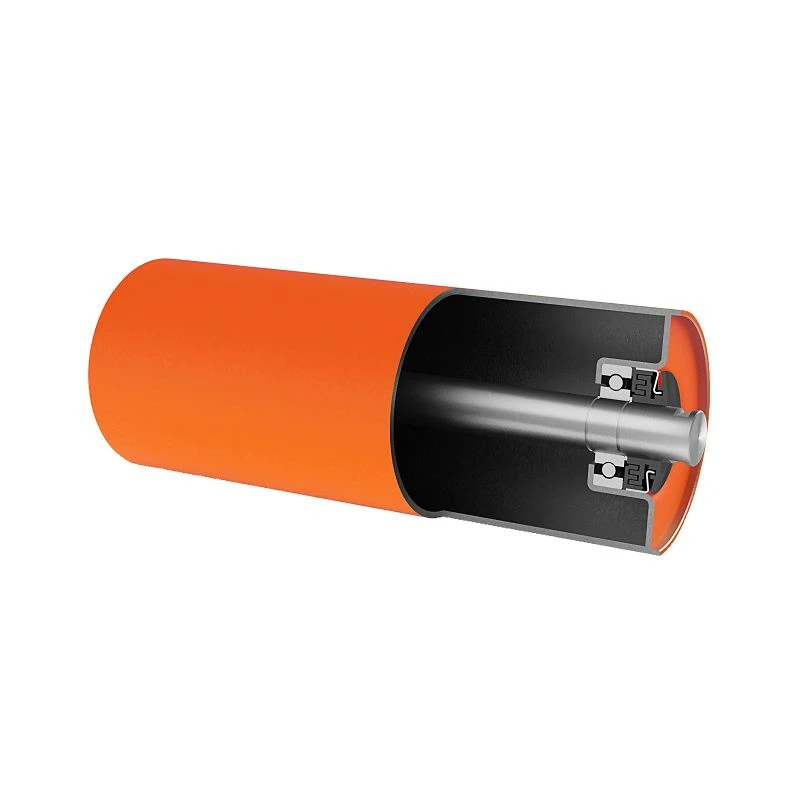
For example, in a heavy - duty conveyor system used in mining or manufacturing, high - pressure applications are common. The rollers need to generate enough frictional force to move large and heavy loads. In such cases, Steel Roller are often used due to their high strength and durability. The pressure applied to these rollers is carefully calculated to ensure optimal performance without causing premature failure.
In the printing industry, friction rollers are used to feed paper through printing presses. Here, the pressure - friction relationship needs to be precisely controlled to ensure accurate paper feeding. Too much friction can cause the paper to wrinkle or jam, while too little friction can result in misalignment or inconsistent feeding. Sleeve Roller/Comb Roller are commonly used in these applications as they can provide a more uniform distribution of pressure and friction.
Optimizing the Pressure - Friction Relationship
As a friction roller supplier, we understand the importance of optimizing the pressure - friction relationship for our customers. One way to achieve this is through proper roller selection. We offer a wide range of friction rollers made from different materials, including rubber, steel, and composite materials, to suit various applications. By understanding the specific requirements of each application, such as the load, speed, and environmental conditions, we can recommend the most suitable roller type.
Another approach is to control the pressure applied to the rollers. This can be done through mechanical means, such as adjusting the tension of the belt or using pressure - regulating devices. In some cases, advanced control systems can be used to monitor and adjust the pressure in real - time, ensuring optimal performance under changing conditions.
Surface treatment is also an important aspect of optimizing the pressure - friction relationship. We can apply various surface coatings or treatments to the rollers to enhance their frictional properties. For example, a special rubber compound can be applied to a steel roller to increase its coefficient of friction without sacrificing its strength.
The Role of Spiral Rollers
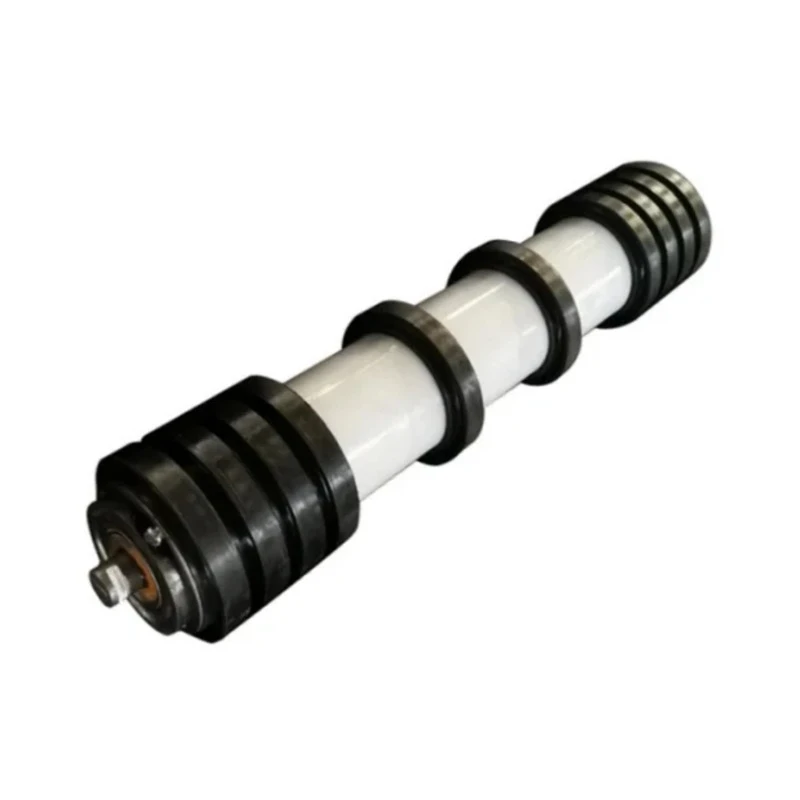
Spiral Roller are a unique type of friction roller that offers several advantages in terms of the pressure - friction relationship. The spiral design of these rollers helps to distribute the pressure more evenly across the contact surface, reducing the risk of localized wear. This also improves the frictional force by providing a more consistent contact between the roller and the belt or other mating surface.
Spiral rollers are particularly useful in applications where there is a tendency for the belt to wander or misalign. The spiral shape creates a self - centering effect, which helps to keep the belt in place and ensures smooth operation. In addition, the spiral design can also help to clean the belt surface by removing debris and contaminants, further improving the friction and overall performance of the system.
Conclusion
In conclusion, the relationship between the pressure and friction of a friction roller is a complex but crucial aspect of industrial machinery operation. As a friction roller supplier, we are committed to helping our customers understand and optimize this relationship to achieve the best possible performance from their equipment. By carefully considering factors such as material selection, surface treatment, and pressure control, we can provide high - quality friction rollers that meet the specific needs of each application.
If you are in need of friction rollers for your industrial application, whether it's a conveyor system, a printing press, or any other machinery, we invite you to contact us for a detailed discussion. Our team of experts is ready to assist you in selecting the right rollers and optimizing their performance. Let's work together to ensure the smooth and efficient operation of your machinery.
References
- Bowden, F. P., & Tabor, D. (1950). Friction and Lubrication of Solids. Oxford University Press.
- Kragelsky, I. V., Dobychin, M. N., & Kombalov, V. S. (1982). Wear of Materials. Pergamon Press.
- Rabinowicz, E. (1995). Friction and Wear of Materials (2nd ed.). Wiley - Interscience.


