
Hey there! As a supplier of belt conveyor rollers, I've seen firsthand how crucial it is to choose the right bearing for these rollers. It can make a huge difference in the performance, durability, and overall efficiency of your conveyor system. So, let's dive into how you can pick the perfect bearing for your belt conveyor rollers.
Understanding the Basics of Bearings in Belt Conveyor Rollers
First off, bearings are like the unsung heroes of belt conveyor rollers. They're responsible for reducing friction between the moving parts of the roller, allowing it to spin smoothly. This not only helps in the efficient movement of the conveyor belt but also extends the lifespan of the rollers.
There are different types of bearings commonly used in belt conveyor rollers, such as ball bearings and roller bearings. Ball bearings are great for applications where there's less load and higher speed. They use balls to separate the moving parts, which reduces friction and allows for smooth rotation. On the other hand, roller bearings are better suited for heavy - load applications. They use cylindrical or tapered rollers, which can handle more weight compared to ball bearings.
Factors to Consider When Choosing a Bearing
Load Capacity
One of the most important factors to consider is the load capacity of the bearing. You need to know how much weight the conveyor belt will be carrying on a regular basis. If you're dealing with light loads, a ball bearing might be sufficient. But for heavy loads, like in mining or heavy manufacturing industries, roller bearings are the way to go. For example, if your conveyor is used to transport large chunks of ore in a mine, you'll need a bearing that can withstand the significant weight without wearing out quickly.
Speed
The speed at which your conveyor belt operates is also crucial. High - speed conveyors require bearings that can handle the rapid rotation without overheating or wearing out prematurely. Ball bearings are generally better for high - speed applications because they have less friction compared to roller bearings. However, if you have a conveyor that runs at a relatively slow speed but carries heavy loads, roller bearings can still be a great choice.
Environmental Conditions
The environment in which the conveyor operates plays a big role in bearing selection. If your conveyor is in a dusty or dirty environment, like a construction site or a cement factory, you'll need a bearing that's sealed to prevent dirt and debris from getting inside. Sealed bearings can protect the internal components from contamination, which can extend the bearing's lifespan. On the other hand, if the conveyor is in a wet or corrosive environment, such as a food processing plant where there's a lot of water and cleaning chemicals, you'll need a bearing made from corrosion - resistant materials like stainless steel.
Maintenance Requirements
Some bearings require more maintenance than others. For example, open bearings need regular lubrication to keep them running smoothly. If you don't have the time or resources for frequent maintenance, you might want to consider sealed or maintenance - free bearings. These bearings come pre - lubricated and are designed to last longer without the need for constant attention.
Types of Bearings for Different Belt Conveyor Roller Applications
General - Purpose Applications
For most general - purpose belt conveyor systems, deep - groove ball bearings are a popular choice. They're versatile, can handle both radial and axial loads to some extent, and are relatively inexpensive. They're suitable for conveyors in warehouses, distribution centers, and light manufacturing facilities where the loads are not extremely heavy and the speeds are moderate.
Heavy - Duty Applications
In heavy - duty applications, such as in the mining, steel, or automotive industries, tapered roller bearings are often used. These bearings can handle large radial and axial loads simultaneously, making them ideal for conveyors that carry heavy and bulky materials. They're designed to withstand the high stresses and forces associated with heavy - duty operations.
Specialized Applications
There are also specialized bearings for specific applications. For example, if you're looking for a roller that can reduce noise, you might want to check out our Low Noise Rubber Lagged Roller. These rollers are designed with special bearings and rubber lagging to minimize noise during operation, which is great for environments where noise is a concern, like in food processing plants or hospitals.
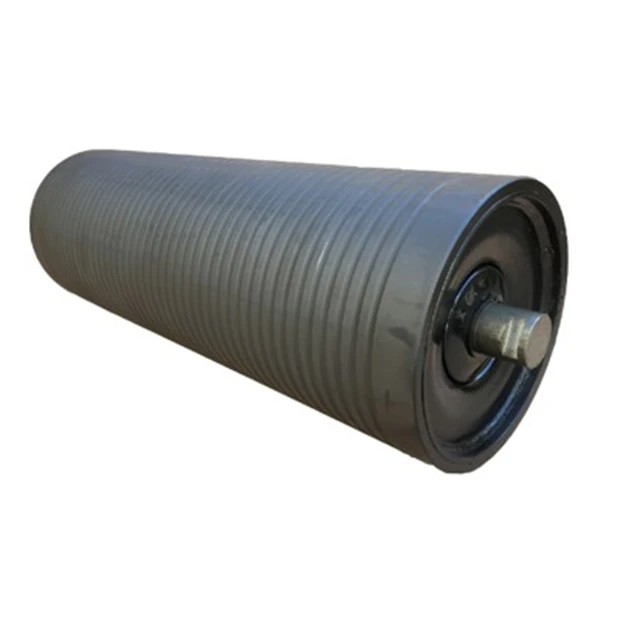
If you need a roller that can handle abrasive materials, our Rubber Spiral Roller Idler is a great option. The rubber spiral design helps to clean the belt and prevent material buildup, and the bearings are selected to withstand the harsh conditions associated with abrasive materials.
For applications where you need a lightweight and corrosion - resistant roller, our Nylon Conveyor Roller is worth considering. The nylon material is not only lightweight but also resistant to corrosion, and the bearings are chosen to complement the properties of the nylon roller.
Making the Right Choice
Once you've considered all the factors mentioned above, it's time to make a decision. It's always a good idea to consult with a bearing expert or an engineer if you're not sure which bearing is the best fit for your specific application. They can help you analyze your requirements in more detail and recommend the most suitable bearing.

When choosing a bearing, also consider the quality of the bearing. A high - quality bearing might cost more upfront, but it can save you money in the long run by reducing maintenance costs and downtime. Look for bearings from reputable manufacturers that have a proven track record of producing reliable products.
Conclusion
Choosing the right bearing for your belt conveyor rollers is not a decision to be taken lightly. It requires careful consideration of factors like load capacity, speed, environmental conditions, and maintenance requirements. By understanding these factors and the different types of bearings available, you can make an informed decision that will ensure the smooth and efficient operation of your conveyor system.
If you're in the market for belt conveyor rollers and need help choosing the right bearings, don't hesitate to reach out. We're here to assist you in finding the perfect solution for your specific needs. Whether you're a small business or a large industrial operation, we have the expertise and the products to meet your requirements. Contact us today to start the conversation and take your conveyor system to the next level.
References
- "Bearing Selection Handbook" by SKF
- "Conveyor Belt Technology" by Fenner Dunlop


