
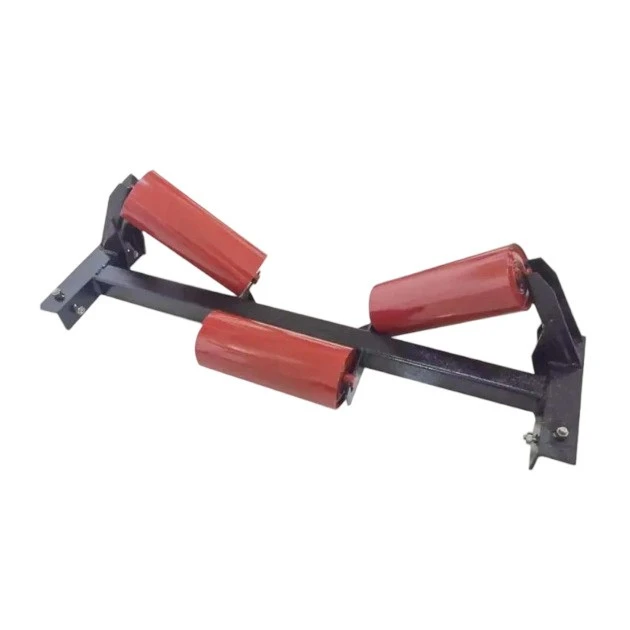
As a supplier of Impact Frame Stations, I've witnessed firsthand how temperature can have a profound impact on these crucial components in various industrial settings. Impact Frame Stations are designed to support conveyor belts and absorb the shock of material loading, ensuring smooth and efficient operation. However, temperature fluctuations can significantly affect their performance, durability, and overall functionality.
Thermal Expansion and Contraction
One of the most immediate effects of temperature on Impact Frame Stations is thermal expansion and contraction. All materials expand when heated and contract when cooled, and the metal components of Impact Frame Stations are no exception. This expansion and contraction can cause changes in the dimensions of the frame, potentially leading to misalignment or stress on the structure.
For example, in high - temperature environments, the metal frames may expand, causing the rollers to become misaligned. Misaligned rollers can lead to uneven wear on the conveyor belt, increased friction, and reduced belt life. In extreme cases, it can even cause the belt to derail, resulting in costly downtime and repairs.
Conversely, in cold temperatures, the metal contracts. This contraction can make the frame stiffer and more brittle, increasing the risk of cracking or breakage, especially if the frame is subjected to sudden impacts or vibrations.
Material Properties
Temperature also affects the material properties of the components used in Impact Frame Stations. High temperatures can reduce the strength and hardness of metals. As the temperature rises, the atomic structure of the metal becomes more mobile, which can lead to a decrease in its yield strength and ultimate tensile strength. This means that the frame may be more likely to deform under load, compromising its ability to support the conveyor belt and absorb impacts effectively.
On the other hand, low temperatures can make metals more brittle. The ductility of the metal decreases, and it becomes more prone to fracture. For instance, a sudden shock or impact on a cold Impact Frame Station may cause a crack to propagate rapidly through the material, leading to a complete failure of the frame.
Lubrication
Lubrication is essential for the smooth operation of the rollers in Impact Frame Stations. Temperature has a significant impact on the viscosity of lubricants. In high - temperature environments, lubricants tend to thin out. This reduced viscosity can result in inadequate lubrication between the moving parts, increasing friction and wear. The lubricant may also evaporate more quickly, requiring more frequent re - lubrication.
In cold temperatures, lubricants thicken. The increased viscosity can make it difficult for the lubricant to reach all the necessary areas, and it may not flow freely to provide proper lubrication. This can lead to increased resistance in the rollers, slower operation, and potential damage to the bearings.
Corrosion
Temperature can also influence the rate of corrosion in Impact Frame Stations. High temperatures, especially in combination with humidity, can accelerate the corrosion process. The heat increases the chemical reactivity of the metal surface, making it more susceptible to oxidation. Corrosion can weaken the structure of the frame, reducing its strength and durability over time.
In addition, changes in temperature can cause condensation to form on the metal surface. Condensation provides the moisture necessary for corrosion to occur. If the Impact Frame Station is located in an environment with large temperature variations, such as an outdoor setting, the repeated cycles of condensation and evaporation can further exacerbate the corrosion problem.
Impact on Related Components
The temperature - induced changes in Impact Frame Stations can also have a cascading effect on related components. For example, misaligned rollers due to thermal expansion can put additional stress on the conveyor belt. This can lead to premature wear and tear of the belt, increasing the frequency of belt replacements.
Moreover, if the frame is damaged or deformed due to temperature - related issues, it can affect the performance of other components such as the V - return Frame Station. The V - return Frame Station is designed to guide the return side of the conveyor belt, and any misalignment or instability in the Impact Frame Station can disrupt its proper functioning.
Similarly, the Adjusted Carrier Trough Idler Bracket and Offset Center Roller Frame Station rely on the stable support of the Impact Frame Station. Temperature - induced problems in the Impact Frame Station can cause these components to work less efficiently, leading to overall reduced performance of the conveyor system.
Mitigating the Impact of Temperature
To minimize the impact of temperature on Impact Frame Stations, several strategies can be employed. Firstly, proper material selection is crucial. Choosing metals with low coefficients of thermal expansion can reduce the extent of dimensional changes due to temperature fluctuations. Additionally, using corrosion - resistant materials can help prevent the degradation of the frame over time.
Secondly, implementing a regular maintenance schedule is essential. This includes checking for signs of misalignment, wear, and corrosion, as well as ensuring proper lubrication. In high - temperature environments, more frequent lubrication may be required, and in cold temperatures, using lubricants specifically designed for low - temperature applications can help maintain proper operation.
Thirdly, providing insulation or climate control in the area where the Impact Frame Station is located can help stabilize the temperature. This can be particularly effective in indoor settings where it is more feasible to control the environment.
Conclusion
In conclusion, temperature has a far - reaching impact on Impact Frame Stations. From thermal expansion and contraction to changes in material properties, lubrication, and corrosion, temperature fluctuations can significantly affect the performance and durability of these components. As a supplier, I understand the importance of addressing these issues to ensure the reliable operation of conveyor systems.
If you are in the market for high - quality Impact Frame Stations or need advice on how to mitigate the impact of temperature on your existing equipment, I encourage you to reach out for a procurement discussion. We have a wide range of products and solutions tailored to meet your specific needs and can provide expert guidance to help you optimize the performance of your conveyor systems.

References
- ASM Handbook, Volume 2: Properties and Selection: Nonferrous Alloys and Special - Purpose Materials. ASM International.
- Perry, R. H., & Green, D. W. (1997). Perry's Chemical Engineers' Handbook. McGraw - Hill.
- Shigley, J. E., & Mischke, C. R. (2001). Mechanical Engineering Design. McGraw - Hill.


