
Belt conveyor rollers are crucial components in various industries, facilitating the smooth movement of materials. One critical aspect that significantly impacts their performance and lifespan is corrosion resistance. In this blog, we'll delve into the corrosion - resistance properties of belt conveyor rollers, a topic of great importance for both suppliers and end - users. As a belt conveyor rollers supplier, we understand the significance of these properties and offer a wide range of products designed to meet different corrosion - resistance requirements.
Understanding Corrosion in Belt Conveyor Rollers
Corrosion is a natural process that occurs when metal reacts with its environment. In the case of belt conveyor rollers, the main factors contributing to corrosion include moisture, chemicals, temperature, and abrasion. Moisture can lead to the formation of rust, especially when the rollers are exposed to humid air or in wet operating conditions. Chemicals, such as acids or alkalis, can accelerate the corrosion process and cause damage to the roller surface. High temperatures can also increase the rate of corrosion, and abrasion can remove the protective layer on the roller, making it more vulnerable to corrosion.
Types of Belt Conveyor Rollers and Their Corrosion - Resistance Properties
Anti - rock Split Idler Rubber Comb Roller
The Anti - rock Split Idler Rubber Comb Roller is a unique type of belt conveyor roller. This roller is often used in harsh environments where there is a high risk of impact and abrasion. The rubber comb on the roller not only provides excellent anti - rock and anti - split performance but also offers some degree of corrosion resistance. The rubber acts as a barrier between the metal core of the roller and the corrosive environment, reducing the direct contact of the metal with moisture and chemicals. However, it's important to note that the rubber can also be damaged over time, especially if exposed to certain chemicals or extreme temperatures. Regular inspection and maintenance are necessary to ensure its long - term corrosion - resistance.
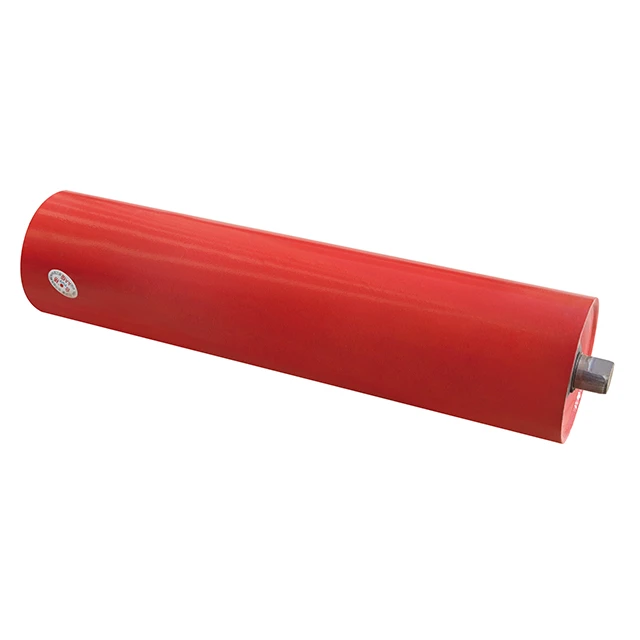

Ordinary Carbon Steel Conveyor Roller
The Ordinary Carbon Steel Conveyor Roller is one of the most commonly used types of conveyor rollers. Carbon steel is relatively inexpensive and easy to manufacture, but it has a relatively low corrosion - resistance. In the absence of proper protection, carbon steel rollers will quickly rust when exposed to moisture. To improve their corrosion - resistance, various surface treatment methods can be applied. For example, painting the rollers can form a protective film on the surface, preventing oxygen and water from reaching the metal. Galvanizing is another popular method, where a layer of zinc is coated on the steel surface. Zinc is more reactive than iron, so it will corrode first, sacrificing itself to protect the steel.
Belt Conveyor Plain Rollers
Belt Conveyor Plain Rollers come in different materials, including stainless steel, aluminum, and plastic - coated steel. Stainless steel rollers have excellent corrosion - resistance due to the presence of chromium in the steel, which forms a passive oxide layer on the surface. This layer protects the steel from further oxidation and corrosion. Aluminum rollers are also corrosion - resistant, as they form a thin oxide layer when exposed to air. This oxide layer is self - healing and provides good protection against corrosion, especially in non - acidic and non - alkaline environments. Plastic - coated steel rollers combine the strength of steel and the corrosion - resistance of plastic. The plastic coating acts as a physical barrier, preventing the steel from coming into contact with the corrosive environment.
Factors Affecting the Corrosion - Resistance of Belt Conveyor Rollers
Environment
The operating environment is a major factor affecting the corrosion - resistance of belt conveyor rollers. In industries such as mining, chemical processing, and food processing, the rollers may be exposed to highly corrosive substances. For example, in a mining environment, the rollers may come into contact with acidic mine water, which can cause severe corrosion. In a chemical processing plant, the rollers may be exposed to various chemicals, including strong acids and alkalis. In a food processing plant, the rollers need to be resistant to moisture and food - related chemicals. On the other hand, in a dry and clean environment, such as a warehouse, the corrosion risk is relatively low.
Surface Treatment
As mentioned earlier, surface treatment plays a crucial role in improving the corrosion - resistance of belt conveyor rollers. Different surface treatment methods have different levels of effectiveness. For example, a simple paint coating may only provide short - term protection, while galvanizing and powder coating can offer more long - term corrosion protection. The quality of the surface treatment also matters. A poorly applied coating may have defects, such as cracks or pores, which can allow moisture and chemicals to penetrate and reach the metal surface.
Material Selection
The choice of material for the belt conveyor rollers directly affects their corrosion - resistance. As we've discussed, stainless steel, aluminum, and plastic - coated steel are more corrosion - resistant than ordinary carbon steel. When selecting the material, factors such as the operating environment, cost, and load - bearing requirements need to be considered. For example, in a highly corrosive environment, stainless steel rollers may be the best choice, even though they are more expensive. In a less corrosive environment, carbon steel rollers with proper surface treatment may be sufficient.
Importance of Corrosion - Resistance in Belt Conveyor Rollers
Extended Lifespan
Corrosion can significantly reduce the lifespan of belt conveyor rollers. When the rollers corrode, the surface becomes rough, which can increase friction and cause wear on the conveyor belt. In addition, corrosion can weaken the structural integrity of the rollers, leading to premature failure. By using corrosion - resistant rollers, the lifespan of the rollers can be extended, reducing the frequency of replacement and saving costs in the long run.
Improved Performance
Corrosion - resistant rollers can ensure the smooth operation of the belt conveyor system. A smooth - surface roller reduces friction, which in turn reduces the power consumption of the conveyor system. It also helps to maintain the proper tension of the conveyor belt, preventing belt slippage and misalignment. This leads to improved overall performance and efficiency of the conveyor system.
Reduced Maintenance
Rollers that are resistant to corrosion require less maintenance. Without the need to constantly clean and repair corroded rollers, the maintenance workload and cost can be significantly reduced. This allows the operators to focus on other important aspects of the conveyor system, such as load management and system optimization.
How We Ensure the Corrosion - Resistance of Our Belt Conveyor Rollers
As a belt conveyor rollers supplier, we take several steps to ensure the high - quality corrosion - resistance of our products. First, we carefully select the materials for our rollers. We source high - grade stainless steel, aluminum, and other corrosion - resistant materials from reliable suppliers. Second, we apply advanced surface treatment techniques. Our galvanizing process is carried out under strict quality control to ensure a uniform and thick zinc coating. We also use high - quality paints and powder coatings to provide additional protection. Third, we conduct rigorous quality inspections. Before the rollers leave our factory, they undergo a series of tests to ensure their corrosion - resistance meets or exceeds industry standards.
Conclusion
The corrosion - resistance properties of belt conveyor rollers are of vital importance in various industrial applications. Different types of rollers, such as the Anti - rock Split Idler Rubber Comb Roller, Ordinary Carbon Steel Conveyor Roller, and Belt Conveyor Plain Rollers, have different levels of corrosion - resistance. Factors such as the environment, surface treatment, and material selection all affect the corrosion - resistance of the rollers. By understanding these properties and factors, end - users can make informed decisions when choosing belt conveyor rollers.
If you're looking for high - quality, corrosion - resistant belt conveyor rollers for your industrial needs, we're here to help. We offer a wide range of products to meet different requirements. Contact us to discuss your specific needs and start a procurement negotiation. We're committed to providing you with the best solutions and excellent service.
References
- Smith, J. (2018). Corrosion Prevention in Industrial Conveyor Systems. Industrial Materials Journal, 25(3), 123 - 135.
- Johnson, A. (2019). Material Selection for Belt Conveyor Rollers in Harsh Environments. Conveyor Technology Review, 32(2), 45 - 56.
- Brown, C. (2020). Surface Treatment Methods for Improving Corrosion Resistance of Conveyor Rollers. Manufacturing and Engineering Magazine, 40(4), 78 - 89.


