
In the realm of belt conveyor systems, return flat idlers play a crucial role in ensuring smooth and efficient operation. As a dedicated supplier of return flat idlers, I often encounter inquiries from customers about the availability of different sizes. This blog post aims to delve into this topic, exploring the various sizes of return flat idlers available, their applications, and the factors to consider when choosing the right size for your specific needs.
The Importance of Return Flat Idlers
Before we discuss the sizes, let's briefly understand the significance of return flat idlers in a belt conveyor system. Return flat idlers are installed on the return side of the conveyor belt, supporting the belt as it travels back to the loading point. They help to maintain the belt's alignment, reduce friction, and prevent sagging, which can lead to belt damage and inefficient operation. By providing stable support, return flat idlers contribute to the overall reliability and longevity of the conveyor system.
Available Sizes of Return Flat Idlers
One of the key advantages of working with a reputable return flat idler supplier is the wide range of sizes available. We offer return flat idlers in various diameters and lengths to accommodate different conveyor belt widths and load capacities. The most common diameters range from 76mm to 159mm, while the lengths can vary from 600mm to 2400mm. These standard sizes are designed to meet the needs of most industrial applications, but we also provide custom-made idlers to suit specific requirements.
- Small Sizes: Smaller return flat idlers, with diameters of 76mm to 108mm, are typically used in light-duty conveyor systems. They are suitable for applications where the belt width is relatively narrow and the load capacity is low, such as in packaging lines, food processing plants, and small-scale material handling operations. These idlers are lightweight and easy to install, making them a cost-effective solution for smaller conveyor systems.
- Medium Sizes: Medium-sized return flat idlers, with diameters of 108mm to 133mm, are the most commonly used in industrial conveyor systems. They offer a good balance between load capacity and cost, making them suitable for a wide range of applications, including mining, quarrying, and manufacturing. These idlers can handle moderate belt widths and load capacities, providing reliable support for the conveyor belt.
- Large Sizes: Larger return flat idlers, with diameters of 133mm to 159mm, are designed for heavy-duty conveyor systems. They are used in applications where the belt width is wide and the load capacity is high, such as in large-scale mining operations, power plants, and steel mills. These idlers are built to withstand the extreme conditions and heavy loads associated with these industries, ensuring long-term performance and durability.
Applications of Different Sizes
The choice of return flat idler size depends on several factors, including the conveyor belt width, load capacity, speed, and the type of material being conveyed. Here are some common applications for different sizes of return flat idlers:
- Small Sizes: As mentioned earlier, small return flat idlers are ideal for light-duty conveyor systems. They are commonly used in applications such as:
- Packaging lines: To support the conveyor belt in the packaging process, ensuring smooth and efficient operation.
- Food processing plants: To handle delicate food products without causing damage, maintaining hygiene standards.
- Small-scale material handling: To transport small parts and components in manufacturing facilities.
- Medium Sizes: Medium-sized return flat idlers are suitable for a wide range of industrial applications, including:
- Mining and quarrying: To convey bulk materials such as coal, ore, and gravel over long distances.
- Manufacturing: To transport heavy components and products in assembly lines.
- Power plants: To handle coal and other fuels in the power generation process.
- Large Sizes: Large return flat idlers are specifically designed for heavy-duty applications, such as:
- Large-scale mining operations: To convey large volumes of ore and overburden in open-pit mines.
- Steel mills: To transport hot steel products and raw materials in the steelmaking process.
- Ports and terminals: To handle large quantities of bulk cargo, such as grain, coal, and ore.
Factors to Consider When Choosing the Right Size
When selecting the right size of return flat idler for your conveyor system, it is important to consider the following factors:

- Belt Width: The width of the conveyor belt is one of the most important factors to consider. The return flat idler should be wide enough to support the belt without causing excessive wear or damage. As a general rule, the idler length should be at least 100mm wider than the belt width.
- Load Capacity: The load capacity of the conveyor system is another crucial factor. The return flat idler should be able to support the weight of the belt and the material being conveyed without sagging or bending. The load capacity of the idler is determined by its diameter, length, and the type of bearings used.
- Speed: The speed of the conveyor belt also affects the choice of return flat idler size. Higher speeds require idlers with better dynamic balance and lower friction to ensure smooth operation. In general, larger idlers are more suitable for high-speed conveyor systems.
- Environmental Conditions: The environmental conditions in which the conveyor system operates can also influence the choice of return flat idler size. For example, in dusty or corrosive environments, it is important to choose idlers with sealed bearings and corrosion-resistant materials to prevent damage and ensure long-term performance.
Related Products
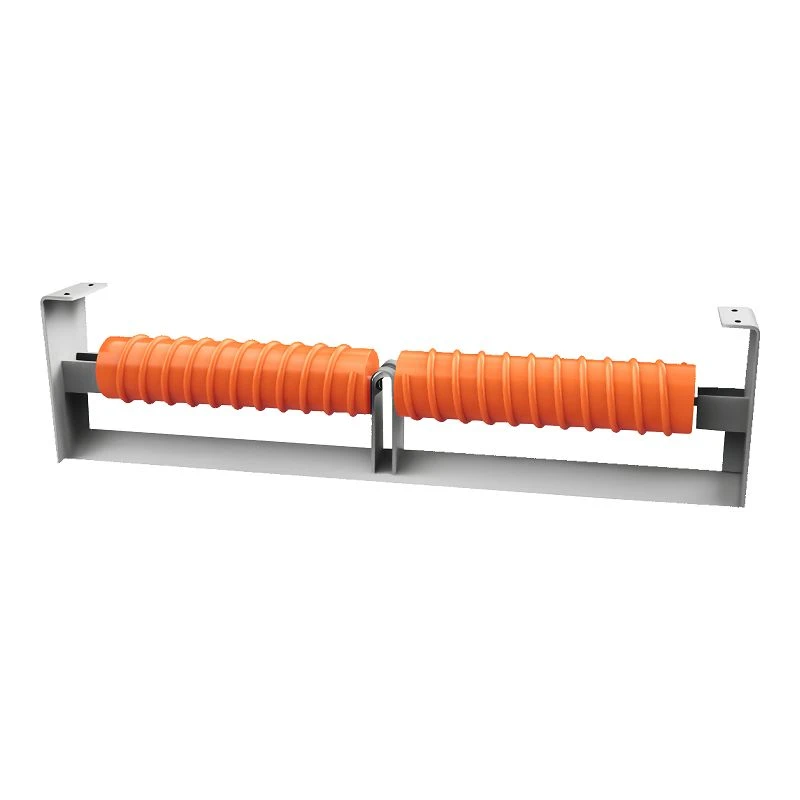
In addition to return flat idlers, we also offer a range of other belt conveyor idlers to meet the diverse needs of our customers. Some of our popular products include the Return Guide Self-aligning Idler, which helps to keep the conveyor belt centered and prevent misalignment, and the Return Flat Spiral Idler, which is designed to clean the belt and remove any debris or material buildup. We also provide the 35° Carrier Impact Roller Set, which is used to absorb the impact of the material being loaded onto the conveyor belt, reducing wear and tear on the belt and the idlers.
Conclusion
In conclusion, there are indeed different sizes of return flat idlers available to suit various conveyor belt widths and load capacities. As a supplier, we understand the importance of providing high-quality idlers that meet the specific needs of our customers. By considering factors such as belt width, load capacity, speed, and environmental conditions, you can choose the right size of return flat idler for your conveyor system, ensuring smooth and efficient operation.
If you are in the market for return flat idlers or any other belt conveyor idlers, we invite you to contact us for a consultation. Our team of experts will be happy to assist you in selecting the right products for your application and provide you with a competitive quote. Let's work together to optimize the performance of your conveyor system and enhance your productivity.
References
- Conveyor Equipment Manufacturers Association (CEMA). Belt Conveyor Idlers Handbook.
- ISO 15379:2002. Continuous mechanical handling equipment - Safety code for belt conveyors.
- DIN 22101:2011. Belt conveyors for mining - Belt conveyors, troughed belt conveyors, flat belt conveyors - Safety requirements, testing.


