
Hey there! As a supplier of Spiral Rollers, I often get asked about the heat resistance of these nifty little things. So, I thought I'd sit down and write a blog post to share what I know.
First off, let's talk about what a Spiral Roller is. It's a type of conveyor roller that has a spiral-shaped groove on its surface. This design helps to guide the conveyor belt and keep it centered, reducing the chances of it slipping off. Spiral Rollers are used in a wide range of industries, from mining and quarrying to food processing and packaging.
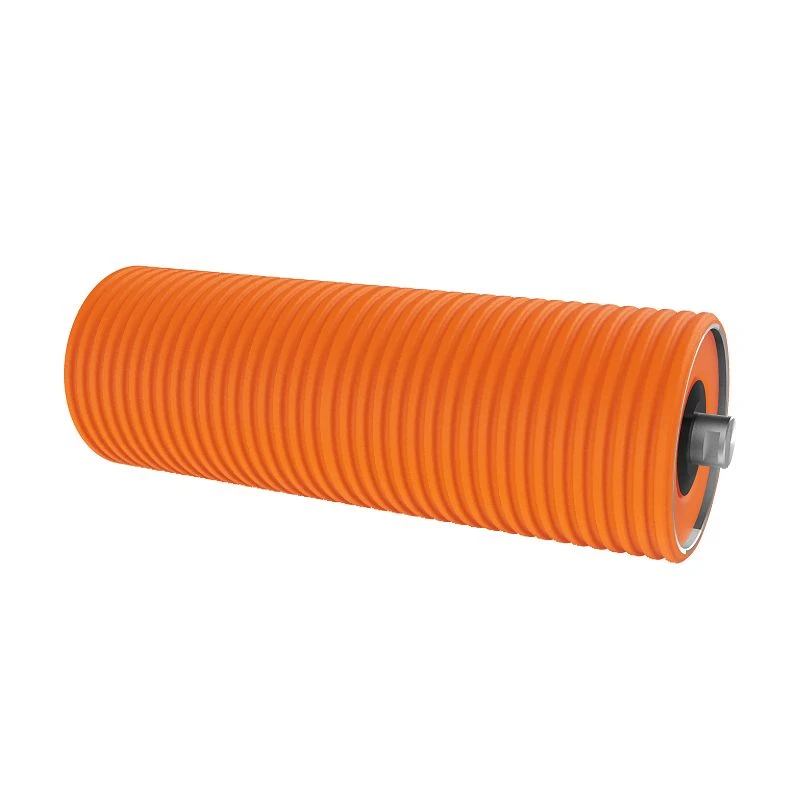

Now, when it comes to heat resistance, it's important to understand that different materials have different properties. The heat resistance of a Spiral Roller depends largely on the material it's made from.
Common Materials and Their Heat Resistance
Steel Spiral Rollers
Steel is one of the most commonly used materials for Spiral Rollers. It's strong, durable, and can withstand a fair amount of heat. Generally, steel Spiral Rollers can handle temperatures up to around 400 - 500 degrees Celsius. This makes them suitable for many industrial applications where moderate heat is involved, such as in some metal processing plants or in conveyor systems near furnaces.
However, at higher temperatures, steel starts to lose its strength. The structural integrity of the roller can be compromised, and it may deform over time. This can lead to issues with the conveyor belt, such as misalignment or uneven wear.
Rubber-Coated Spiral Rollers
Rubber-coated Spiral Rollers are another popular option. The rubber coating provides additional grip for the conveyor belt, reducing slippage. But when it comes to heat resistance, rubber has its limitations.
Most standard rubber compounds used in Spiral Rollers can only withstand temperatures up to about 80 - 120 degrees Celsius. Beyond this range, the rubber can start to degrade. It may become brittle, crack, or even melt in extreme cases. This not only affects the performance of the roller but can also contaminate the conveyor belt and the products being transported.
There are, however, special high-temperature rubber compounds available. These can withstand temperatures up to around 200 - 250 degrees Celsius, but they are more expensive and may not be as widely available.
Ceramic-Coated Spiral Rollers
Ceramic-coated Spiral Rollers offer excellent heat resistance. Ceramic has a very high melting point and can handle temperatures well above 1000 degrees Celsius. This makes them ideal for applications in extremely high-heat environments, such as in glass manufacturing or in some types of foundries.
The ceramic coating also provides good wear resistance, which means the roller can last longer even in harsh conditions. You can check out more about Ceramic Coated Conveyor Roller on our website.
Factors Affecting Heat Resistance
It's not just the material that affects the heat resistance of a Spiral Roller. There are other factors to consider as well.
Duration of Exposure
The length of time the roller is exposed to heat matters. A roller may be able to handle a high temperature for a short period without significant damage, but continuous exposure can cause problems. For example, a steel roller might be okay with a brief spike in temperature to 600 degrees Celsius, but if it's exposed to this temperature for hours on end, it will start to show signs of wear and tear.
Heat Transfer
How the heat is transferred to the roller also plays a role. If the heat is transferred through direct contact, such as when the roller is touching a hot surface, it can heat up more quickly and reach higher temperatures. On the other hand, if the heat is transferred through radiation or convection, the temperature increase may be more gradual.
Environmental Conditions
The surrounding environment can affect the heat resistance of the roller. For example, if the area is humid, it can affect the performance of the rubber coating on a rubber-coated roller. Moisture can cause the rubber to swell or promote the growth of mold, which can further reduce its heat resistance.
Applications Based on Heat Resistance
Depending on the heat resistance of the Spiral Roller, different applications are suitable.
Low-Heat Applications
For applications where the temperature is relatively low, such as in food processing plants or in some light manufacturing facilities, rubber-coated Spiral Rollers are often a good choice. They provide good grip and are cost-effective. You can also consider Heavy Duty Rubber Ring Cushion Buffer Idler for these types of applications.
Medium-Heat Applications
In industries where the temperature ranges from around 100 - 400 degrees Celsius, steel Spiral Rollers are commonly used. They can handle the heat without significant issues and are strong enough to support heavy loads. This includes applications in some chemical plants or in certain types of recycling facilities.
High-Heat Applications
When dealing with extremely high temperatures, ceramic-coated Spiral Rollers are the way to go. They can maintain their performance even in the most challenging heat environments, such as in glass production or in some types of heat treatment processes.
Why Choose Our Spiral Rollers?
As a supplier, we take pride in offering high-quality Spiral Rollers. We carefully select the materials based on the specific requirements of the application. Whether you need a roller for a low-heat, medium-heat, or high-heat environment, we've got you covered.
Our team of experts can help you choose the right Spiral Roller for your needs. We also offer customization options, so you can get a roller that fits your exact specifications. And if you're not sure about the heat resistance requirements of your application, we can provide you with detailed advice and guidance.
If you're in the market for Spiral Rollers or any other types of conveyor rollers, like Impact Roller, don't hesitate to reach out. We're here to help you find the best solution for your business. Whether you're a small-scale operation or a large industrial facility, we can provide you with the products and support you need.
So, if you have any questions or want to discuss your requirements, just give us a shout. We look forward to working with you and helping you improve the efficiency of your conveyor systems.
References
- Smith, J. (2018). Conveyor Roller Materials and Their Properties. Industrial Conveyor Journal.
- Johnson, A. (2019). Heat Resistance in Conveyor Components. Manufacturing Technology Review.
- Brown, C. (2020). The Impact of Temperature on Conveyor Roller Performance. Conveyor Solutions Magazine.


